
Richmond County Probate Court Role
North Carolina does not use a separate county probate court for Richmond County estates. Probate is handled through the Clerk of Superior Court, who also serves the probate function. The official North Carolina estates help topic explains that a will has no legal effect until it is probated by a court, usually the Clerk of Superior Court. For Richmond County, that means the estate file, probate copy questions, and many estate administration filings route through the Clerk at the Richmond County Judicial Center.
Probate has two related meanings in the North Carolina source material. It can mean the court process that decides whether a purported will is legally valid. It can also refer more broadly to estate administration, where a personal representative handles assets and debts after death. In full administration, the Clerk gives authority to the personal representative, who inventories assets, gives notice to creditors, pays valid debts, and distributes what remains to heirs or beneficiaries.
The North Carolina Judicial Branch estates help topic gives the statewide estate administration framework used in Richmond County.
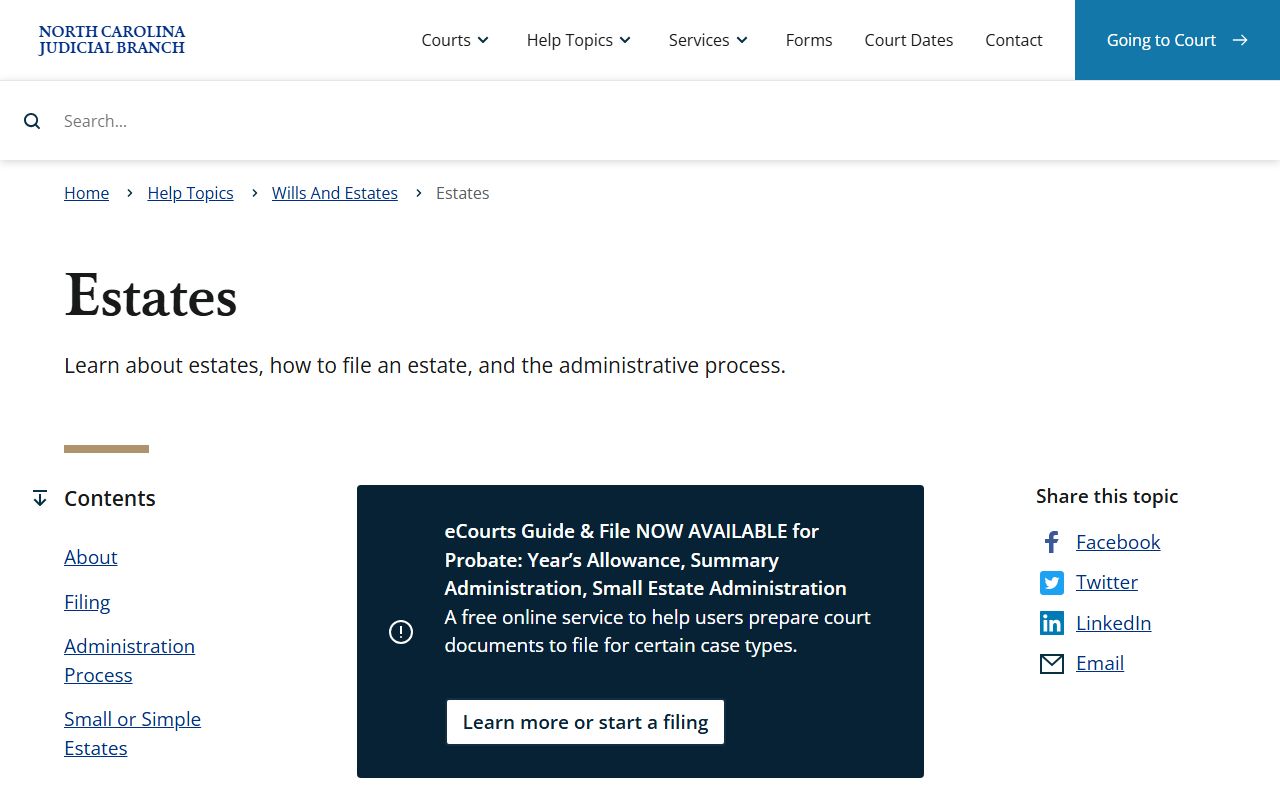
That statewide source supplies the probate concepts, while the Richmond County Clerk supplies the local file access point.
Richmond County Probate Terms
Estate files use terms that are easy to confuse. These definitions follow the North Carolina research and common court-record language. A person reading a Richmond County probate file should also watch for case events, inventories, accountings, notices, and orders, because those entries show the status of the estate more clearly than the file title alone.
- Testator
- The person who made a will.
- Executor
- The person named in a will to carry out its instructions after the will is probated.
- Intestate
- Dying without a valid will, so estate distribution follows North Carolina law.
- Guardianship
- A court-supervised arrangement for a minor or an adult who needs a legally appointed decision maker.
- Conservatorship
- A term often used for control of another person's property or finances; North Carolina estate files may use guardianship and related special proceeding terms.
- Personal representative
- The person authorized by the Clerk to administer an estate.
Search Richmond County Probate Records
Estate case information can be searched through the North Carolina eCourts Portal, and the Judicial Branch says civil, special proceeding, and estates cases can also be accessed on public self-service terminals in clerk offices. The Portal is useful for case information, hearings, and summaries. It is not a full substitute for a paper estate file when a user needs a filed will, inventory, accounting, clerk order, or certified copy.
The recommended Richmond County probate records search path starts broad and then moves to the local file. Smart Search can be used by decedent name, personal representative name, or case number if known. Search Hearings includes a "Probate or Mental Health" hearing type, but mental health details may be restricted. If online access is limited by CAPTCHA, browser issues, a non-digitized file, or public-view limits, the next step is a public terminal or Clerk counter request.
- Identify the decedent, possible file number, and the county where the decedent lived or owned property.
- Search eCourts Smart Search by name or case number and filter to Richmond County when possible.
- Use Search Hearings if a pending probate or related special proceeding hearing date is needed.
- Call or visit the Richmond County Clerk of Superior Court for paper estate file inspection and copies.
- Ask the Clerk which AOC estate form applies before filing, because full administration, small estates, year's allowance, and guardianship matters use different forms.
Note: A will deposited for safekeeping before death is not the same as a probated, public estate file.
Richmond County Probate Search Fields
The probate search fields come from the eCourts Smart Search and Search Hearings captures in the research file. Estate records may appear with civil, probate, mental health, special proceeding, or related case categories depending on the record type and the search interface. Narrowing to Richmond County matters because the statewide portal can return records from other counties with similar names.
| Field label | Type | Use for probate search |
|---|---|---|
| Record Number or Name | Text | Search by estate case number, decedent name, or party name in Last, First format. |
| Advanced Filtering Options | Collapsible panel | Open filters for location, party, case type, status, and filing dates. |
| Filter by Location | Dropdown | Select Richmond County for county-specific estate results. |
| Filter by Case Type | Dropdown | Use when estate, special proceeding, probate, or mental health options are available. |
| File Date Start / End | Date | Narrows estate filings by date range. |
| Select Hearing Types | Dropdown | Search Hearings includes Probate or Mental Health. |
Richmond County Probate Contact
The local probate court contact is the Clerk of Superior Court at the Richmond County Judicial Center. The same office handles court records, probate filings, estate paper files, and copy requests. Richmond County does not have a separate Register of Wills office. Marriage records route to the Register of Deeds, but probate records route to the Clerk.
Clerk of Superior Court acting as ex officio Judge of Probate
Richmond County Judicial Center
105 W Franklin St
Rockingham, NC 28379
(910) 419-7400
Hours: 8:00 AM-5:00 PM Monday-Friday
Richmond County Probate Fees
The inspected Richmond County research does not include a detailed official estate filing fee chart for applications, letters, guardianships, or accountings. Because the build rules prohibit invented fees, the fee table below separates documented rules from items that must be confirmed with the Clerk before filing. For court files, the Judicial Branch obtaining-records guidance says paper files can be viewed at the clerk's office and staff can provide copies for a fee.
| Probate or copy item | Documented amount or rule |
|---|---|
| Estate filing fee | Not located in inspected Richmond County research; confirm with Clerk before filing. |
| Letters testamentary or administration | Not located in inspected Richmond County research; confirm with Clerk. |
| Paper estate file copies | Copies available from Clerk for a fee; exact local per-page amount not located. |
| Certified criminal background check | $25, included here only as a documented Clerk fee, not a probate fee. |
| Mail payments to Clerk | Money order or certified check only; no cash and no personal checks by mail. |
| In-person court payments | Cash, credit/debit card with processing fee, money order, or certified check; no personal checks. |
What Richmond County Probate Records Show
A Richmond County estate file may show the decedent's name, case number, filing date, personal representative, bond or oath information when applicable, filed will, inventories, creditor notices, claims, receipts, accountings, distributions, clerk orders, and closing documents. The Portal case summary may show causes of action, case events, dispositions, hearings, and financial information when applicable. The paper file remains the better source for the filed documents themselves.
Non-probate assets may not appear in the estate file. The North Carolina estates topic notes that some property passes outside estate administration, such as assets with right of survivorship or named beneficiaries, including some life insurance, retirement accounts, joint accounts, and annuities. Real estate also is not always administered through the probate estate unless the will says so or a sale is needed to pay debts.
The North Carolina Vital Records page is a separate source for death certificates and statewide vital events.
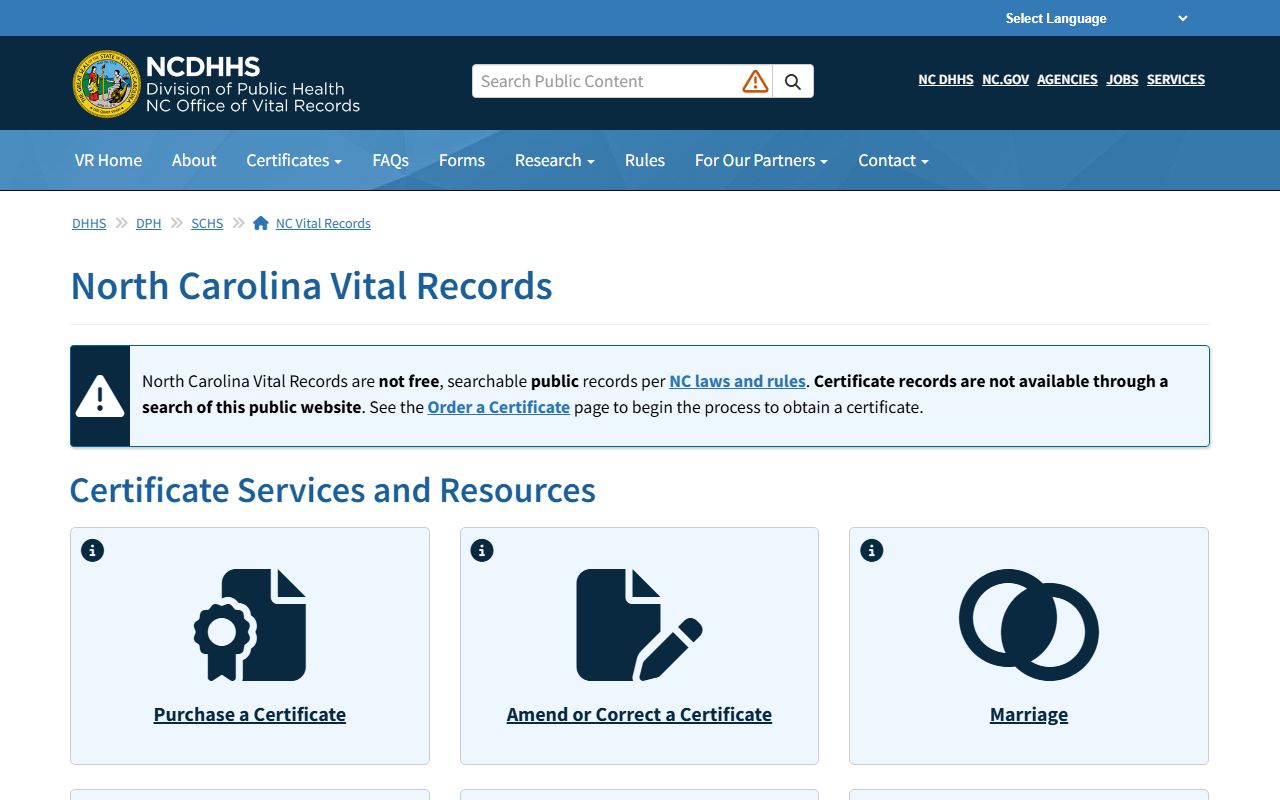
Death certificates may support an estate filing, but they are not the same record as the Richmond County probate case file.
Restricted Richmond County Probate Records
Filed wills become public after death when the will is filed with the Clerk, and any person may view or request a copy for a fee. That rule does not make every related record public. Guardianship files, mental health proceedings, adoption material, juvenile matters, and records with personal identifiers may be restricted, sealed, redacted, or available only by statute or court order. Search Hearings may include probate or mental health as a hearing type, but mental health details should not be assumed public.
A will caveat is a challenge to the validity of a will. The research notes that a caveat proceeding is heard by a Superior Court judge, not just by the Clerk. That can move a probate dispute into a more formal court track while the estate record remains tied to the Richmond County Clerk file. For broader civil case access, the local Richmond County court records page explains Portal and Clerk terminal routes.