
Richmond County Arrest Records and Charges
Richmond County arrest records describe the arrest or custody event. The sheriff and jail side may show name, age, race, sex, admit date, charge description, offense date, bond, court type, court date, charging agency, and arresting agency when a person is held locally. That information is not the full criminal court file. It is an arrest and jail record tied to custody and booking.
Court charges after arrest are different. The District Attorney for Prosecutorial District 21 prosecutes criminal cases for Richmond County, Anson County, and Scotland County. Once formal charges move into court, the case is tracked through District Court or Superior Court with docket entries, hearings, pleas, dispositions, and sentencing. For the full case file and outcome, use Richmond County criminal court records. For custody and jail roster details, use Richmond County inmate records.
The Richmond County Sheriff source is assigned to this court charge records page.
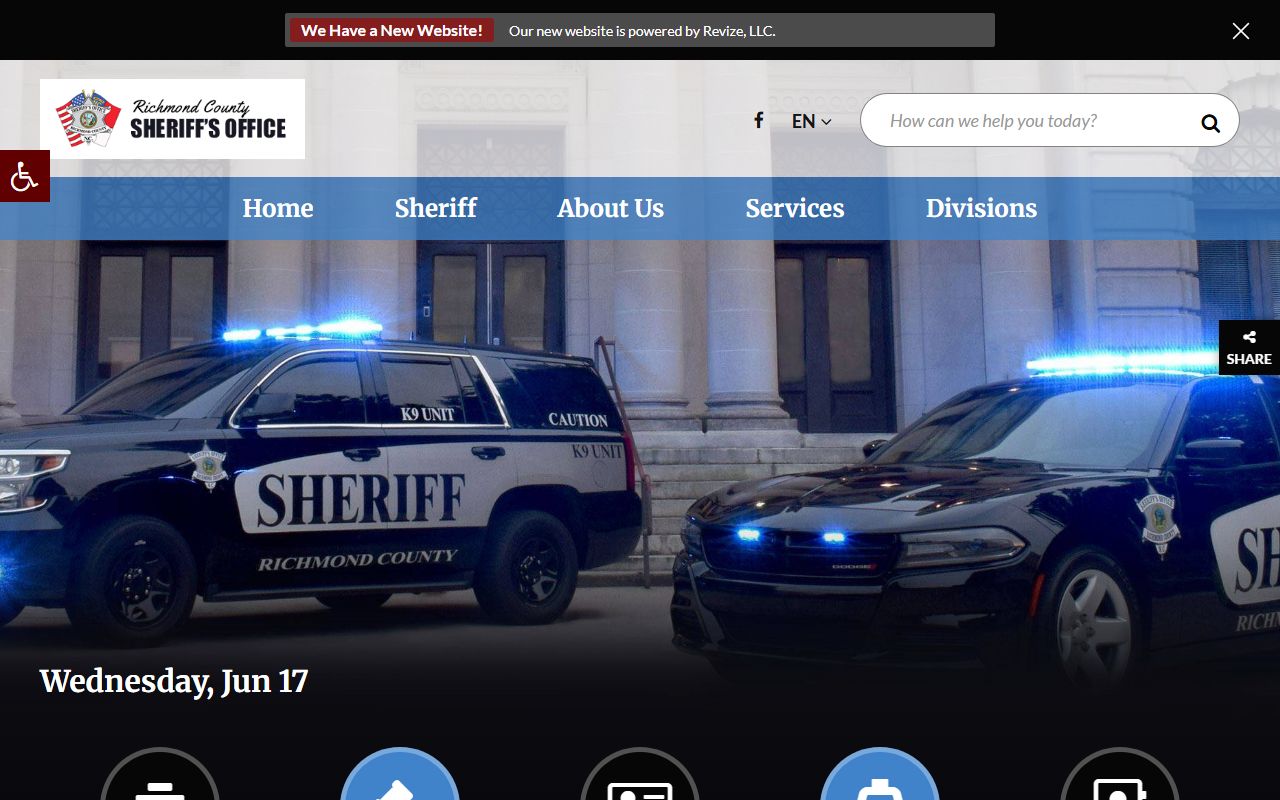
The Sheriff source anchors the arrest-record side of the pathway before a charge becomes part of a court case.
Find Richmond County Arrest Records and Charges
There is no single source that answers every arrest and court charge question. The county jail lookup is useful after a person has been booked into the Richmond County Jail. The jail charge index can show charge descriptions and linked persons in custody. The eCourts Portal is the route for criminal case records after charges enter court. The Clerk of Superior Court is the local office for paper files, certified copies, and official single-county criminal background checks.
- Use the Richmond County jail lookup or inmate grid when the question is whether a person is currently held locally.
- Search the jail charges index by charge description when the charge wording is known but the person is not.
- Use eCourts Smart Search by defendant name or criminal case number to locate filed court charges.
- Open the case summary and compare the charge list, court date, status, disposition, and financial fields.
- Contact the Clerk of Superior Court for certified records, paper files, or an official background check.
The jail app can show charge and bond information tied to custody, but it does not list every active warrant or every old case. The Portal may show related criminal cases, but it is not a certified criminal-history product. The NC Department of Adult Correction offender search covers state prisoners, probationers, parolees, SAVAN, and the sex-offender registry, not county jail custody records.
Charges After Arrest Documents
After an arrest, the charge record depends on the legal paper or filing used to move the accusation into court. North Carolina criminal cases may involve citations, warrants, magistrate process, informations, indictments, or other filings depending on offense type and case path. The research glossary identifies indictment as a grand jury charging document for felony prosecution and information as a formal criminal accusation without indictment in allowed settings.
| Complaint or Warrant | Information | Indictment | |
|---|---|---|---|
| Typical Source | Officer, magistrate, or court process tied to the accusation. | Prosecutor-filed formal accusation where allowed. | Grand jury charging document, commonly tied to felony prosecution. |
| Where It Appears | Jail detail, case file, docket events, or clerk records after filing or return. | Court case file and docket activity. | Superior Court criminal case file and docket activity. |
| What To Check | Charge wording, court date, bond, charging agency, and arresting agency. | Filed offense, amendments, plea path, and disposition. | Felony charge, arraignment, motions, trial or plea, and sentence. |
The Richmond County Sheriff staff and division directory source is part of the Richmond County arrest records source set.
The directory helps identify local law-enforcement divisions that may be involved before a charge appears in the court record.
Richmond County Charge Status
A charge can change as a case moves. The first jail charge description may not match the final court disposition. The prosecutor may proceed, amend, reduce, dismiss, or add charges. A judge may enter orders that affect bond, court date, or case status. One arrest may lead to several charge rows, and each charge can have its own outcome.
| Status | What It Means |
|---|---|
| Pending | The charge is still active in court and no final disposition is shown. |
| Amended | The filed charge was changed, often by wording, statute, severity, or count. |
| Reduced | The case moved to a lower charge or lesser offense as part of court action or plea resolution. |
| Dismissed | The charge ended without conviction, though expunction may still require a separate legal process. |
| Disposed | The court entered an outcome, which must be read charge by charge. |
When a charge involves a missed court date or order for arrest, check court records, the jail roster if the person is detained, and official sheriff or magistrate channels. The Richmond County research did not locate a public active-warrant search, so third-party warrant pages should not be treated as official confirmation.
Charges vs Convictions
Being charged is not the same as being convicted. Richmond County arrest records may show an accusation at booking. A court charge record may show a filed offense. A criminal court record may later show that the charge was dismissed, reduced, amended, or resolved by plea or trial. A conviction exists only when the court enters a guilty plea, guilty verdict, responsible finding, or similar final result.
| Charge | Conviction | |
|---|---|---|
| Record Stage | Arrest, booking, complaint, warrant, information, indictment, or court filing. | Disposition, judgment, plea, verdict, or responsible finding. |
| Meaning | An accusation that must still be resolved. | A court outcome with legal consequences. |
| Can Change | Yes, it may be amended, reduced, added, or dismissed. | Usually changes only through appeal, correction, expunction, or other court order. |
| Best Source | Jail detail, Smart Search, clerk file, and prosecutor filings. | Disposition entry, judgment, sentence, and certified clerk record. |
Richmond County Charge Fields
The Richmond County jail detail inventory is useful because it separates person fields from charge fields. A public inmate profile may show the charge, offense date, court type, court date, bond, bond type, charging agency, and arresting agency. The observed court type value in the research was District, and observed bond type values included Secured Bond and Inclusive. Those labels should be read as displayed fields, not as a full legal explanation of bond conditions.
| Field | What It Shows |
|---|---|
| Charge | The charge description connected to the custody or court entry. |
| Offense Date | The date tied to the alleged conduct. |
| Court Type | The court path shown in the jail record, such as District in the inspected fields. |
| Court Date | The scheduled appearance tied to the charge. |
| Bond | The amount or bond field shown for release purposes. |
| Bond Type | The displayed bond category, such as secured bond when present. |
| Charging Agency | The agency connected to the charge entry. |
| Arresting Agency | The agency listed as making or initiating the arrest. |
Statewide Charge and Offender Searches
Statewide systems can supplement Richmond County arrest and court charge research, but they answer different questions. The NC Department of Adult Correction offender search is for state prisoners, probationers, parolees, SAVAN, and registered sex offenders. It does not replace the Richmond County jail roster and does not serve as the Clerk of Superior Court's criminal case file. For certified single-county criminal background checks, use the clerk process and Form AOC-CR-314.
The NC DAC criminal offender searches source is assigned to this Richmond County court charge records page.
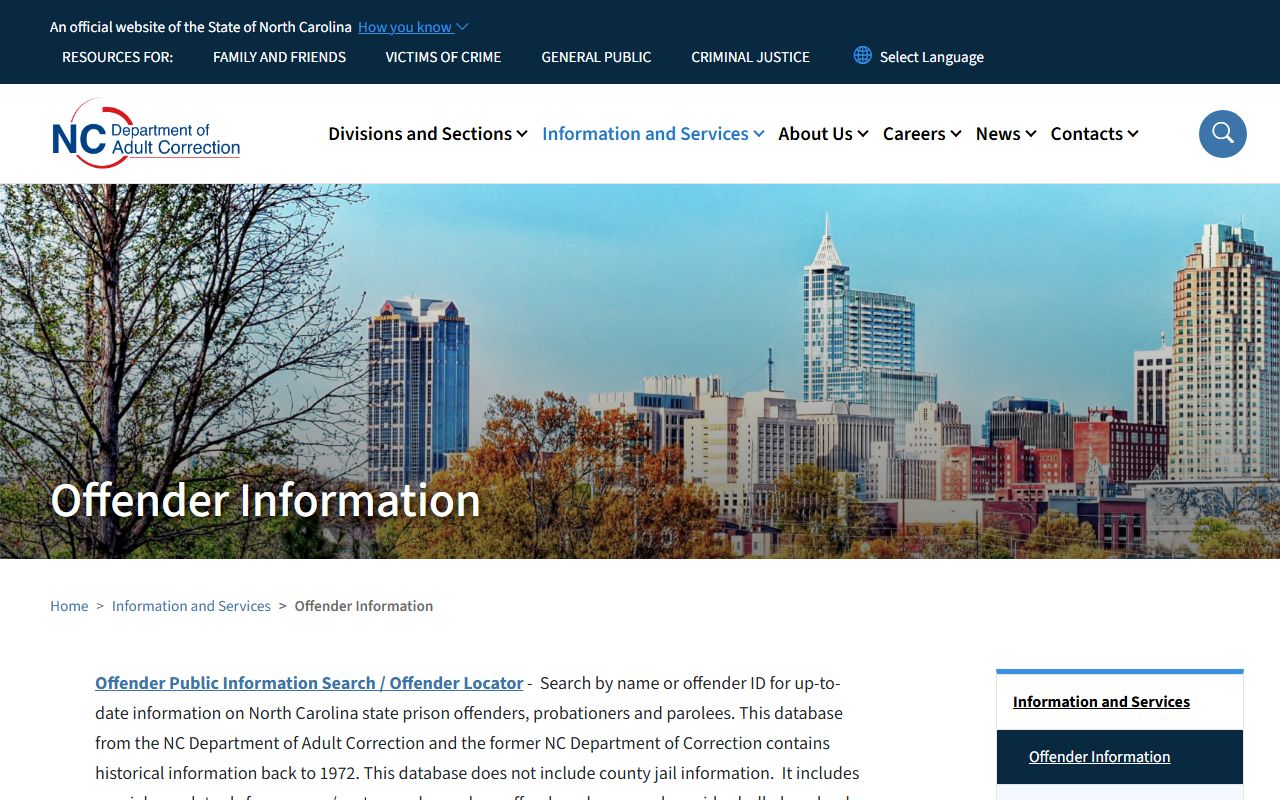
The DAC source is helpful for state custody and supervision research, while Richmond County arrest records and court charges still require county and court channels.
Sealed vs Expunged Charge Records
Dismissed charges do not vanish from public view by default. Expunction is a separate process that can remove or seal qualifying records when the statutory conditions are met. Sealed records are closed from ordinary public access by law or order. Juvenile charges, adoption records, mental health proceedings, and sealed or expunged criminal matters should not be expected in public search results.
| Sealed | Expunged | |
|---|---|---|
| Public Search | Closed from ordinary public view. | Removed or sealed after agencies process the order. |
| Common Trigger | Statute, court order, juvenile law, or sensitive case type. | Petition, eligibility review, prosecutor or agency input, and court order. |
| Richmond County Step | Start with the Clerk when the case number or order is needed. | Use the Richmond County case number and disposition to identify the correct expunction form. |
Background Check Limits
Richmond County arrest records, jail charge fields, and Portal case summaries are not the same as a certified background check. The Judicial Branch directs certified single-county criminal background checks through the Clerk of Superior Court with Form AOC-CR-314 and a $25 fee. A background check is name-based for one county, while jail and court searches can be partial, current, limited, or affected by sealed and expunged records.
Important: Do not use public charge lookups as a substitute for a certified clerk background check.
The Richmond County Sheriff biography and contact source is included in the Richmond County arrest records source set.
The Sheriff contact source helps route arrest-related questions to the correct local law-enforcement office instead of the court clerk.
Restricted Richmond County Charge Records
Public access can be limited by juvenile law, sealing, expunction, mental health restrictions, adoption confidentiality, redaction rules, and court orders. Personal identifiers are also restricted in public records. The Register of Deeds redaction statute cited in the research applies to online recorded images, but the same practical caution applies across public-record work: Social Security numbers, account numbers, and other private identifiers should not be treated as public search data.
For unresolved charge questions, use official channels in order: jail lookup for current custody, Sheriff or jail phone for custody questions, Magistrates for criminal process questions, eCourts Smart Search for filed cases, Search Hearings for court dates, and the Clerk of Superior Court for paper case files or certified records. That route is more reliable than relying on a third-party arrest or charge aggregator.